Melt the Ice…
This is the 9th excerpt from my biography of Esther Williams, The Mermaid and Me. You can find the other entries here. This excerpt follows Esther as she finishes her star turn in the 1940 Aquacade and settles down to a more “normal” life with her new husband. Sort of.
MGM Comes Calling
Almost two million people saw the Aquacade in the summer of 1940—including Lana Turner, who came backstage and asked for Esther’s autograph! The show helped the Exposition splash out of the red from the previous year. Despite losing $1.2 million in the 1939 season, the Fair made $644,000 in 1940. And among those two million visitors were studio scouts and movie producers who paid special attention to the Aquaqueen.
Esther first came to MGM’s attention thanks in large part to a perky blonde who was also at home on the water, though only when it was frozen. Sonja Henie was a Norwegian figure-skating star and four-time Olympic gold medalist who came to Hollywood in 1936. Her films featured ice-skating routines interspersed with light comedy and romance, and they were wildly popular.

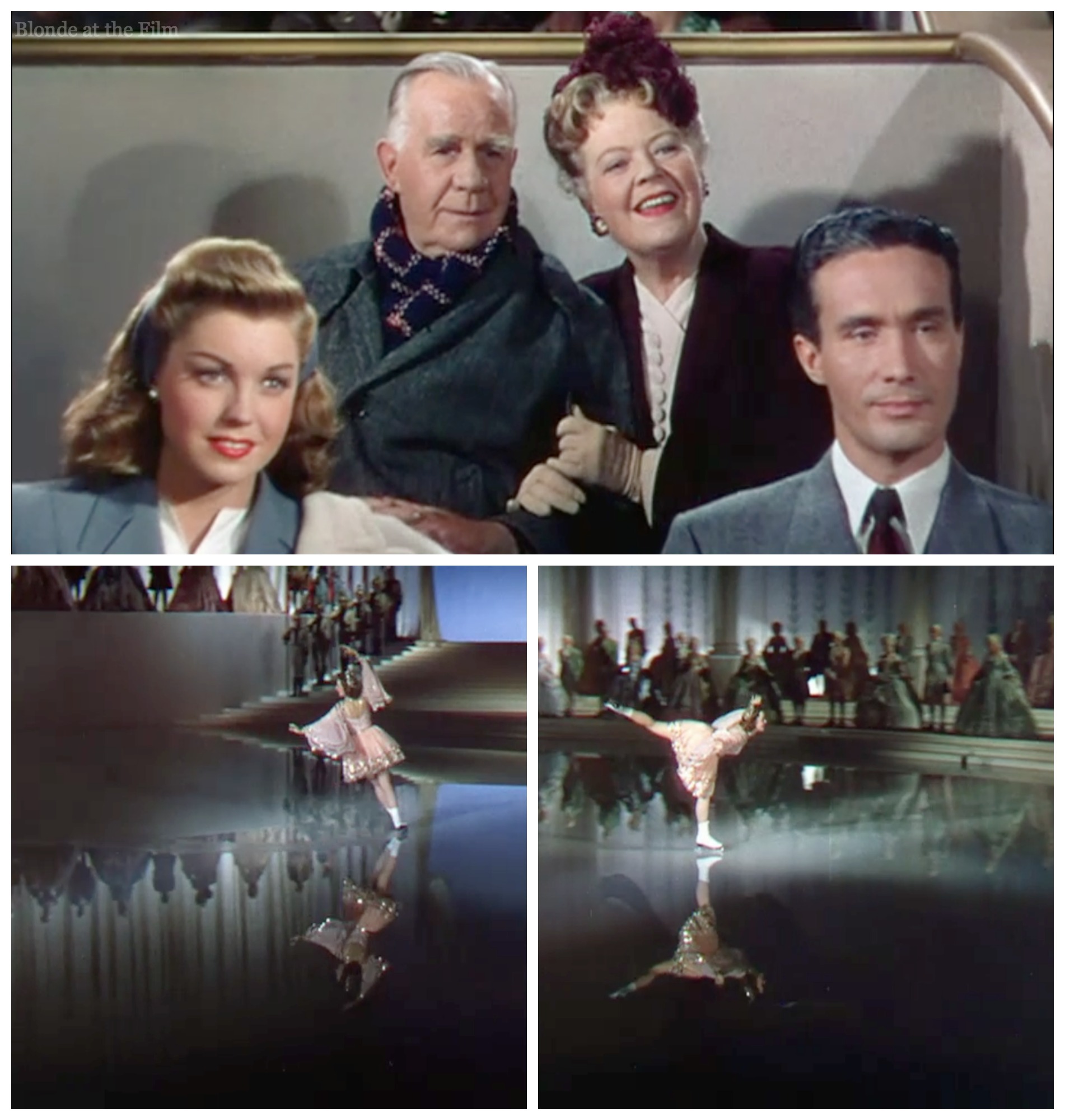
Henie was making millions for 20th Century Fox, and MGM wanted in on similar shtick. They’d tried to duplicate Henie’s ice-skating movies with The Ice Follies of 1939 (1939), starring Joan Crawford, James Stewart, and Lew Ayres as star skaters. But none of the three stars could skate—a major issue that MGM didn’t seem to take seriously. The cast of The International Ice Follies performed the big production numbers, and the stars rarely took the ice, but the movie wasn’t a success. It’s not surprising that MGM gave up on competing directly with Sonja Henie and turned instead to swimmers.
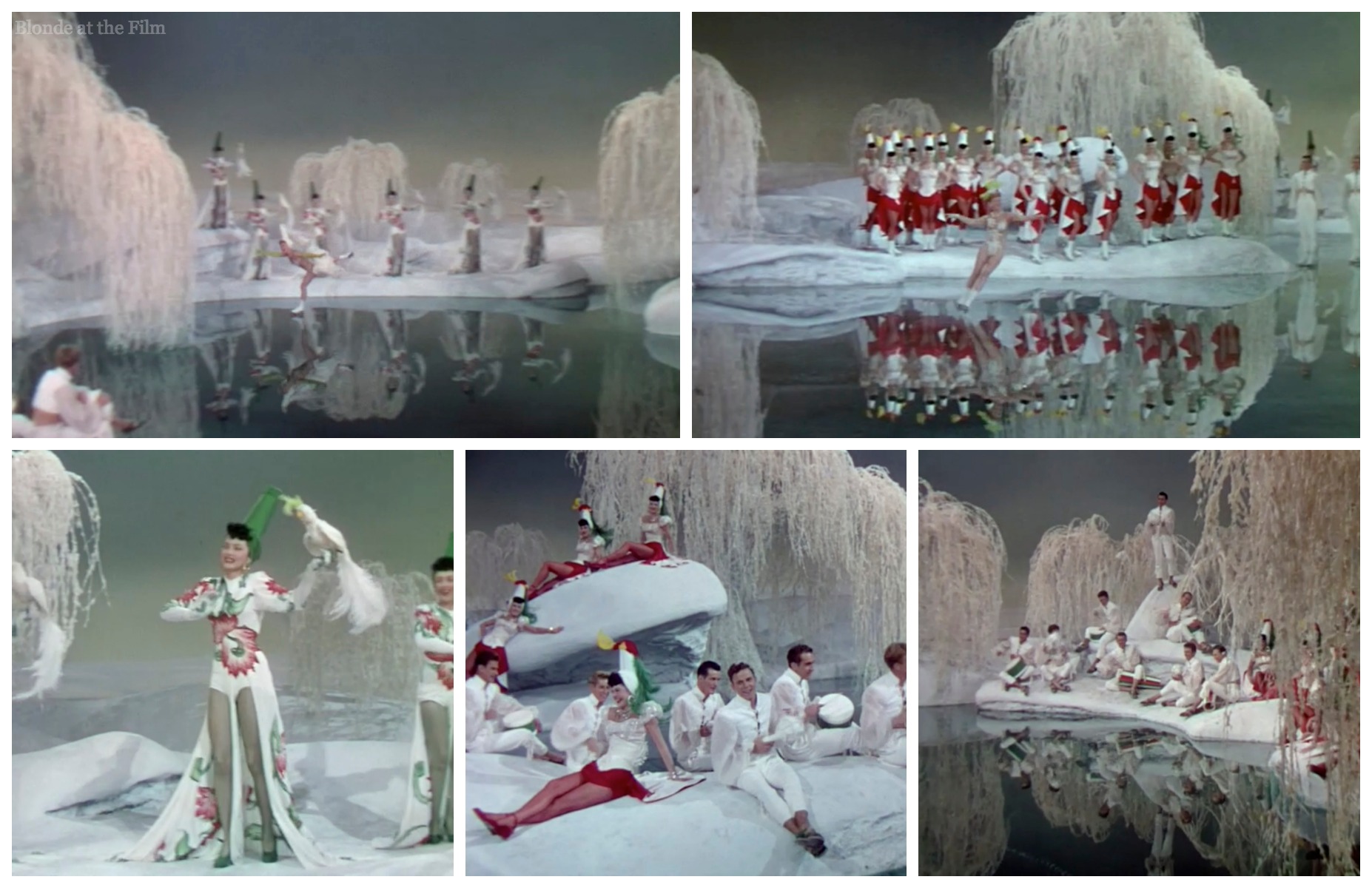
The legend goes that Louis B. Mayer, head of MGM, ordered his minions to find an answer to Fox’s skating movies with this directive: “Melt the ice, get a swimmer, make it pretty!” It’s unclear why MGM went for a swimmer, though the obvious attraction of a beautiful woman in a bathing suit may have been all it took. But they didn’t just want a lovely lady; after The Ice Follies of 1939, they knew they needed someone who could actually swim.
MGM scouts went to the Aquacade, and then producers Jack Cummings and vice-president Sam Katz attended the show themselves. The studio brass, led by Katz, decided that Esther was the perfect candidate for their swimming movies. They offered her a screen test, certain that she would be utterly delighted with the prospect of movie stardom. After all, when a Hollywood studio comes calling, most people jump at the chance. But when Cummings approached Esther, she politely declined. She recalled that the producer was “really very enthusiastic. I think he was under the impression that I was ready to go to work. I thanked him and said I was really very flattered, but that I couldn’t sign a contract because my husband objected to my going into pictures.” Besides Leonard’s disapproval, Esther’s dreams of Olympic glory had been replaced with dreams of a “normal” life. Perhaps her disastrous screen test at Fox made her doubt her suitability for the screen, or maybe she was afraid of going through another audition and being turned down.
Added to all of that, she now had a dim view of show business: the Aquacade had been months of exhausting hours, lascivious co-stars, dank dressing rooms, and pitiful paychecks (thanks to her crooked agent, Roger Marchetti, she received only $125 of her $500 weekly salary), and she was thrilled that it was over. MGM could promise stardom and glamour, but those vague, shimmering dreams faded when compared to the fresh, unpleasant memories of her summer on Treasure Island. So as she listened to Cummings pitch movie stardom at MGM, she remembered thinking, “All things considered, I thought show business was no business for me.” So Esther turned down the chance for a screen test, which was a very rare response for mighty MGM, and focused on finishing her run in the Aquacade.
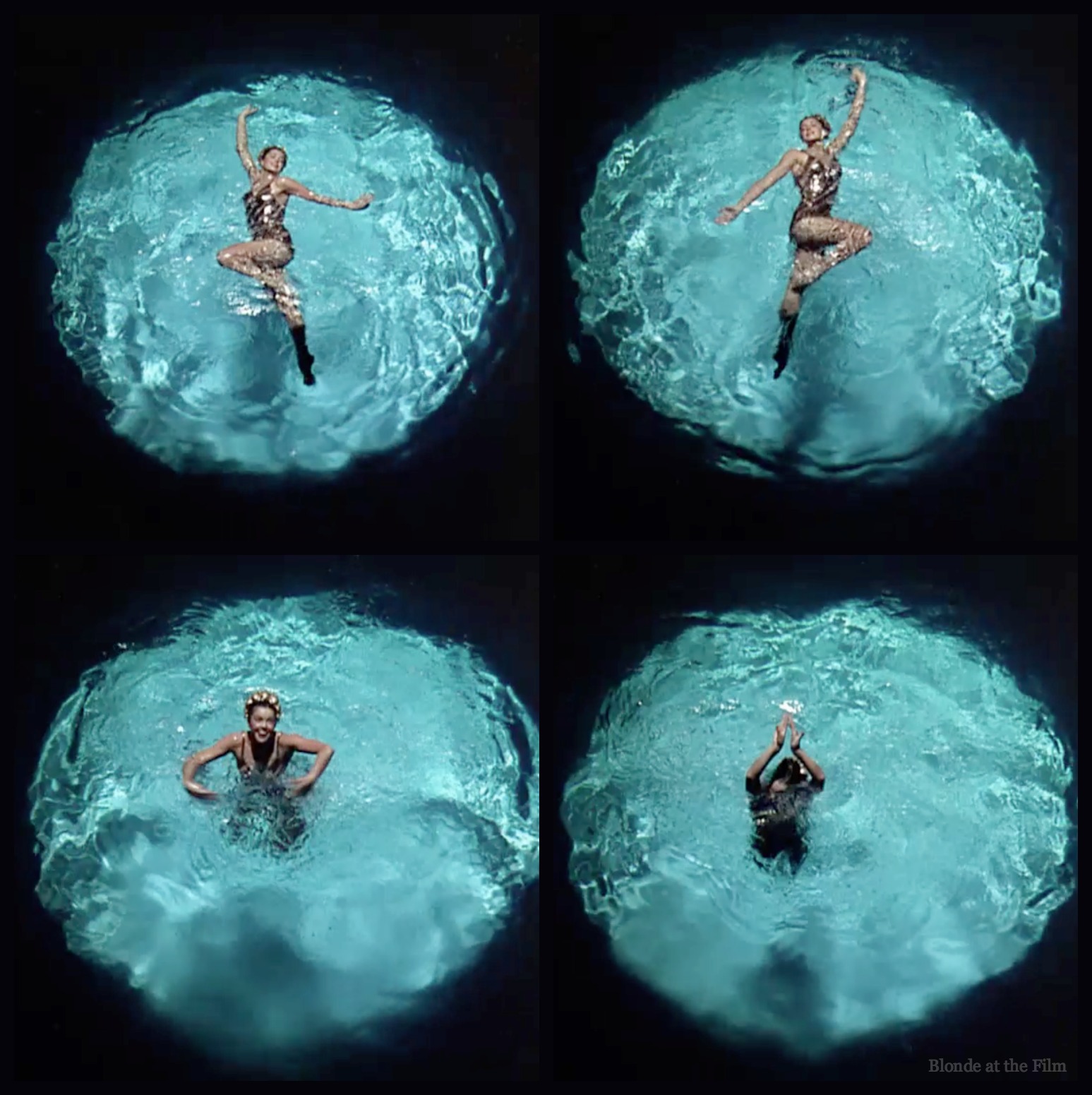
In the weeks before the Fair closed, there were rumors that Billy Rose would take the Aquacade on tour. Both Salici’s Puppets and the Folies Bergere arranged runs in San Francisco theaters after their successful summers, and Rose reportedly wanted to take the Aquacade on tour, too. But those plans never materialized, due partly to the lack of suitable venues across the country, and also to the enormous cost of staging the show.
So when the Fair closed on September 29, 1940, the cast of the Aquacade scattered. Weissmuller took some time off and then returned to MGM to film Tarzan’s Secret Treasure (1941) in the summer of 1941. Corky Kellam toured the country in a solo water show with the “Star of Billy Rose’s Aquacade” label proudly displayed in his publicity. Other featured swimmers like the Hopkins twins and Buster Crabbe, star of the New York Aquacade which also permanently closed in the fall of 1940, performed in “Water Follies,” various exhibitions, and Aquacade-type shows across the country. But Treasure Island’s Aquaqueen was noticeably absent. She didn’t want to continue the Aquacade life, so she said no to tours and shows.
There were no plans to extend the Fair for a third summer, so Treasure Island shut down permanently on September 29. The island was supposed to become a municipal airport after the Fair, which was one reason the state and federal governments poured so much money into the project. Two large hangars and an administration building were constructed for that purpose and used as exhibition space during the Fair. But with the outbreak of WWII, plans for a city airport featuring Pan-American flights to China were scrapped. Instead, the Navy used Treasure Island as a base from 1941-1997.
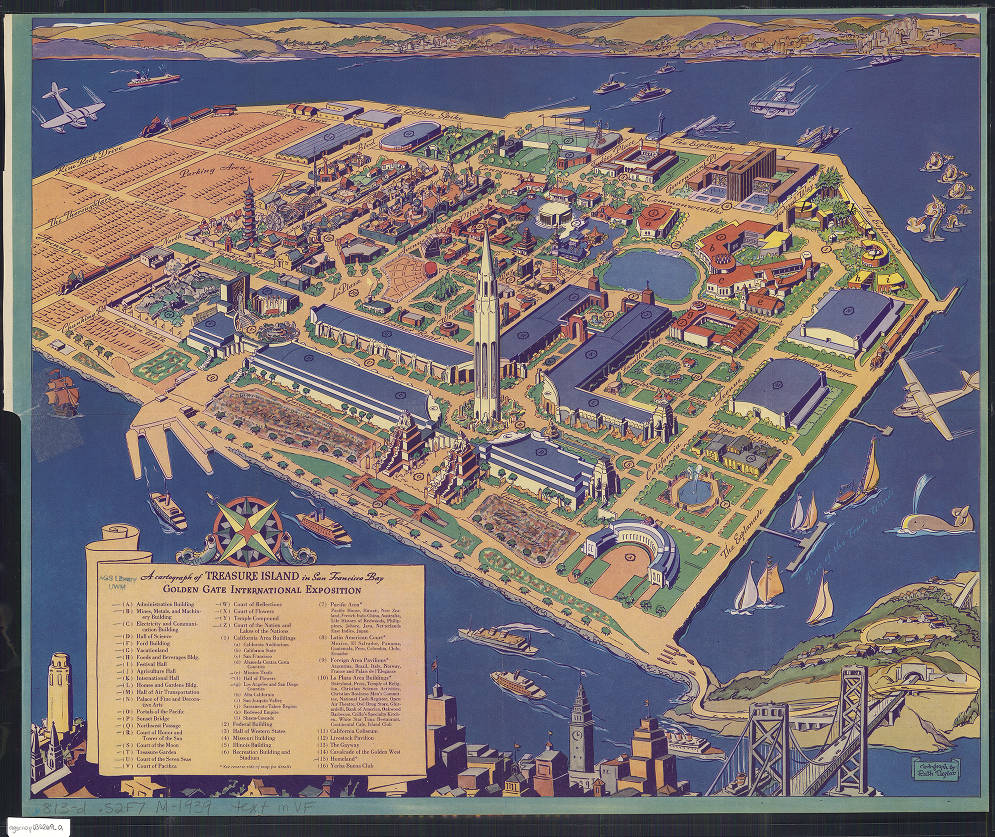
Once the Aquacade closed at the end of September, Esther packed up and headed home to her new husband back in Los Angeles. They settled into a small apartment in Silver Lake near the hospital where Leonard worked as an intern. Esther returned to I. Magnin, and was welcomed back into the fold. It was almost as though the Aquacade had never happened.
The Mermaid and MGM
Life quieted down considerably after Esther’s four month star-turn on Treasure Island. But in between work at I. Magnin and life as Mrs. Kovner, she occasionally re-emerged as “Esther Williams, Aquacade star.” In mid-November, about six weeks after the Aquacade closed, Weissmuller, Esther, and the Hopkins twins reunited as celebrity guests at the 13th Annual Swimming and Diving Meet at the El Mirador Hotel in Palm Springs. It was also a reunion for the women and their old swimming club, as the L.A.A.C. team competed at the meet, and a return to a familiar pool. Esther had appeared as a star amateur at an aquatic show the previous March, and in November 1939, she and Virginia Hopkins had raced for the 100-meter freestyle title in the same pool. Now they appeared as professional “entertainers” fresh off a triumphant Aquacade.
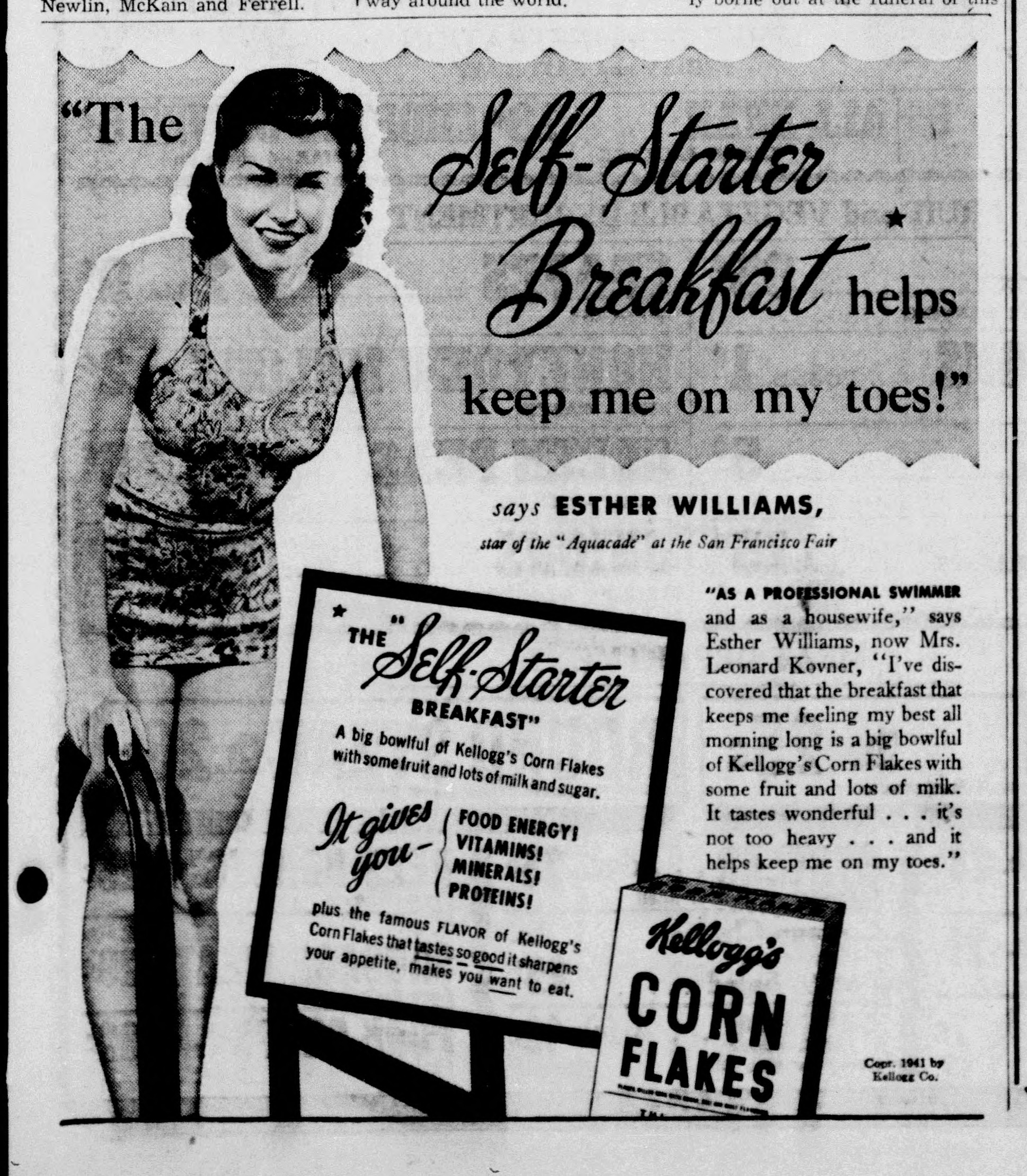
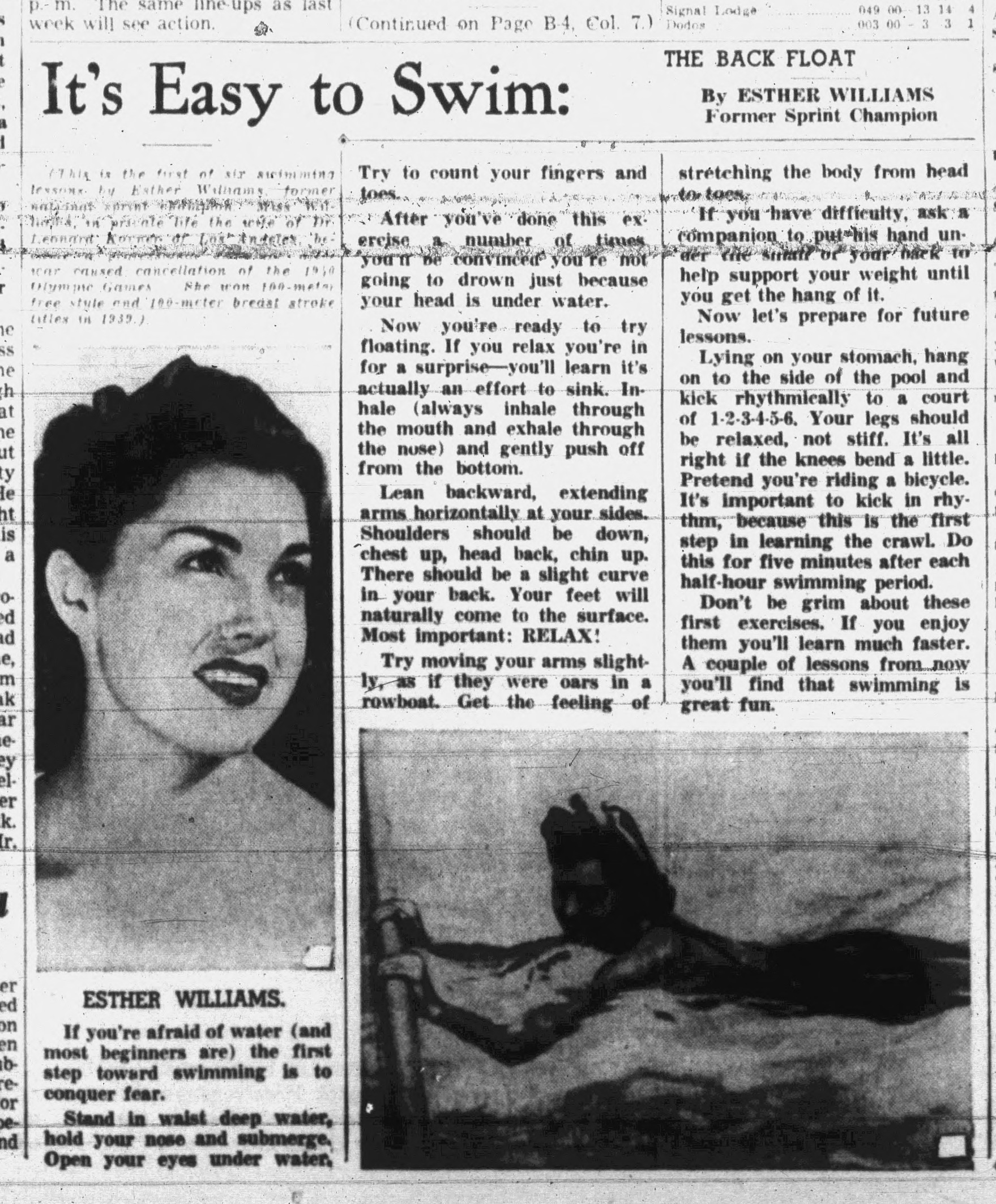
Esther emerged again to model bathing suits in a show in Los Angeles in January of 1941, and she wrote a “how to swim” column in June with simple exercises and advice to beginners. And from the late summer of 1941 to the spring of 1942, she appeared in nationwide advertisements for Kellogg’s Corn Flakes, the “Self Starter Breakfast.” Esther smiled in a bathing suit (of course) and gushed about how the “All-American ready-to-eat cereal” tasted delicious and kept the “star of the San Francisco Aquacade” “on her toes.” It’s unclear if the “It’s Easy to Swim” column or the Kellogg ads were arranged by Billy Rose or by MGM, but regardless, Esther’s face (and figure) stayed in the papers.
Meanwhile, MGM recovered from its initial shock at Williams’ refusal to join the studio and continued chasing her. Various executives and agents called frequently with new offers and new strategies to convince Esther to reconsider. But she didn’t waver, citing her husband’s disapproval and her own desire for a normal life. She repeated her claim that “I don’t want to be an actress. I’m married and my husband wants a wife.” And that was that. Except for those celebrity appearances and advertisements…
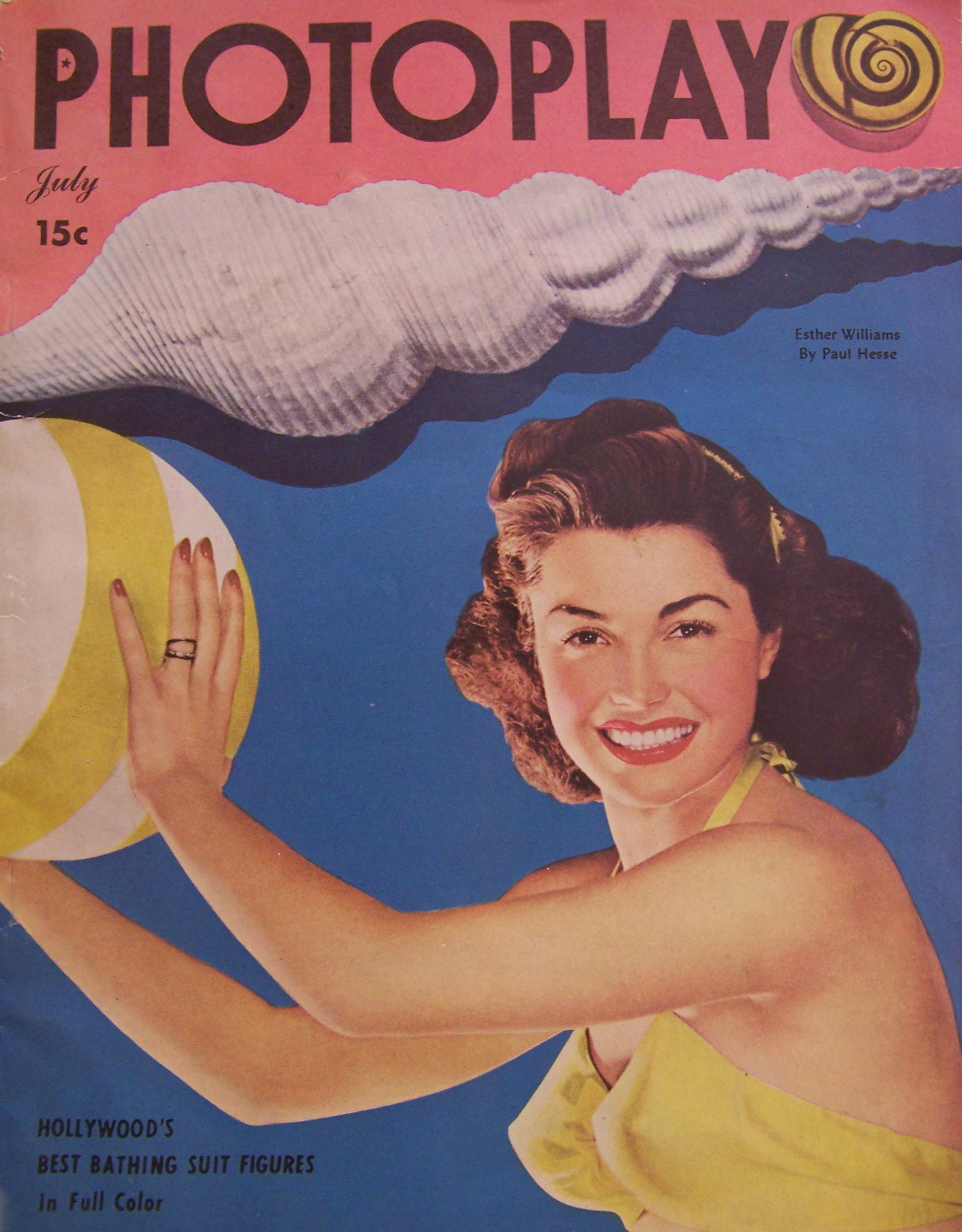
These early appearances and ads are the first in the blurry world of publicity that can twist, mask or completely falsify reality. Relying on newspaper articles and fan magazines, even if they’re just months removed from the events, puts you on very shaky ground, as we saw from the Pan-American Games confusion, and unfortunately, it only gets murkier once MGM’s publicity department really gets going. The image that the studio presented of Esther was terrifyingly consistent but also sometimes patently false.
Even Esther’s autobiography isn’t the final word. I don’t think she and Digby Diehl purposefully prevaricated, but it does appear that they took a great deal of their information about Esther’s early life and career from fan magazines, which aren’t especially interested in accuracy. So when “The Million Dollar Mermaid” and fan magazines trumpet Esther’s desire to be a housewife instead of a movie star, and repeat with awe how she rebuffed MGM, they might be telling the truth.
But they are also echoing her carefully crafted star image (the public persona of a movie star, not necessarily authentic but painstakingly controlled by the studios) as an independent, All-American girl with admirably small-town values. And it’s difficult to know how to interpret reports of celebrity appearances, fashion shows, and ads in late 1940 and early 1941 after the Aquacade and before she signed with MGM. By most accounts, she shunned the spotlight and had no interest in capitalizing on her Aquacade stardom. But she still showed up at various events and appeared in the papers…

And MGM didn’t give up. Esther continued to claim she wasn’t interested due to her desire for a normal life, but there was more to it than that. Esther couldn’t imagine that swimming movies or a swimming movie star could actually become a reality, and she had an even harder time imagining herself in the role. She thought that MGM was crazy, and that the smart move was to stay at I. Magnin. So she repeatedly turned down MGM’s offers.
Big time producer Joe Pasternak, who would go on to produce six of Esther’s films, recounted her startling refusals of vice president Sam Katz’s glimmering offers: “She wasn’t interested, thank you very much. Sam pleaded, protested, limned a beautiful picture of the prospects that awaited her. Still no soap.” So Katz called in Pasternak, who recalls being “immediately enchanted” by Esther and her “clean, chiseled features and a most winning smile.” He asked her why she didn’t want to sign with MGM, and she answered, “I’ll give you one reason. I’m a swimmer, not an actress.” When pressed for the “real” reason she was turning down this incredible chance, she held firm, explaining that although she was flattered by MGM’s offer, “I told you, I’m not an actress and I don’t think I ever will be.”
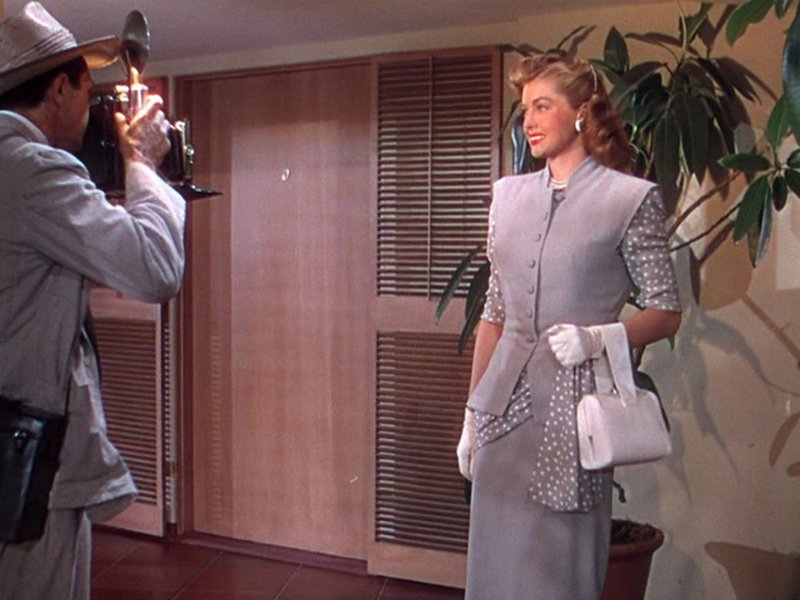
But Pasternak and Katz didn’t accept this self-deprecating answer. As they knew, and continually proved, being a great actress wasn’t always enough for movie stardom, and plenty of “non-actors” became enormous stars. But Esther didn’t want to take the chance. After all, she liked being Mrs. Kovner, she had just gotten a raise, and she was on her way to becoming an assistant buyer: “I was happy. It felt good that I had said no to MGM. I was living a normal life, married, working in a good stable business, where my bosses thought I was doing a good job.”
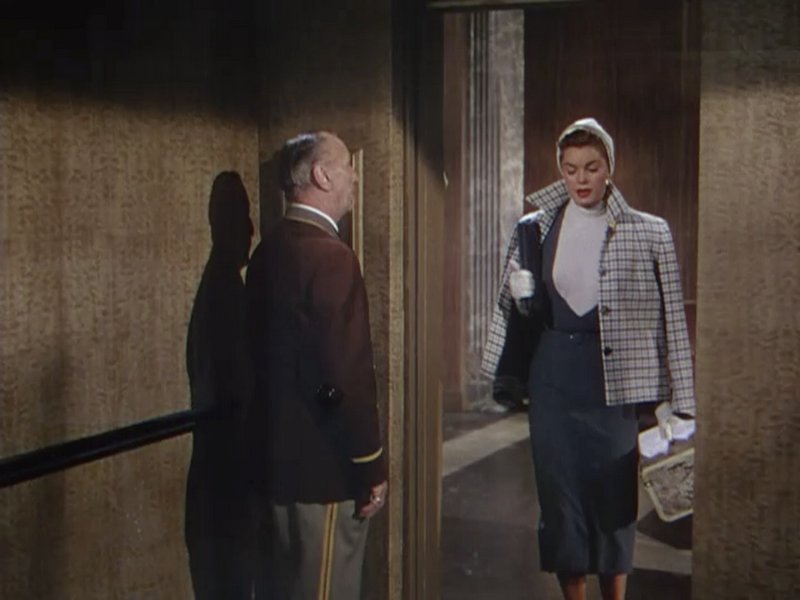
Finally, in August 1941, MGM sent an agent in a limousine to I. Magnin. He begged Esther to meet with L.B. Mayer and tour the studio. She agreed. Her fellow salesgirls and the manager outfitted Esther in a Chanel suit and sent her off to MGM.

Stay tuned for the next excerpt and Esther’s first trip to MGM!
Categories: History
 The Blonde at the Film