
Bathing Beauty
This is the 13th excerpt from my biography of Esther Williams. You can find the other entries here. In the previous post, “Double Life,” Esther filmed Andy Hardy’s Double Life (1942), a career milestone she undertook while she quietly separated from her husband. In this section, Esther films parts in two more movies as MGM prepares an enormous new soundstage for her water musicals.
Sound Stage 30
The turmoil of Esther’s personal life in 1942-44 couldn’t tarnish MGM’s delight with the critical and audience reaction to their new star and her sparkling first appearance. (And of course the public never knew most of it, thanks to MGM’s spin machine.) Now that their mermaid had proved her appeal on screen in Double Life, they began building a set for the spectacular swimming musicals they’d envisioned.
Sound Stage 30 (you can find more on the MGM backlot here) was re-made into a water wonderland. The saucer tank was fine for basic water scenes, but MGM had a different, more elaborate vision for Esther’s films. So they built an incredible complex on Stage 30, the third largest soundstage on the lot at 32,160 square feet, that could handle the fantastic water ballets they wanted to produce. Four different tanks were constructed with the biggest measuring 90 by 90 feet and 20 feet deep. It held a staggering 721,000 gallons, and took seven days to fill. The tanks were outfitted with various fountains, pyrotechnic capabilities, windows below the water-line for underwater shots, and a hydraulic lift that could reach 50 feet in the air. You can see some of the elements at use in the Bathing Beauty finale:
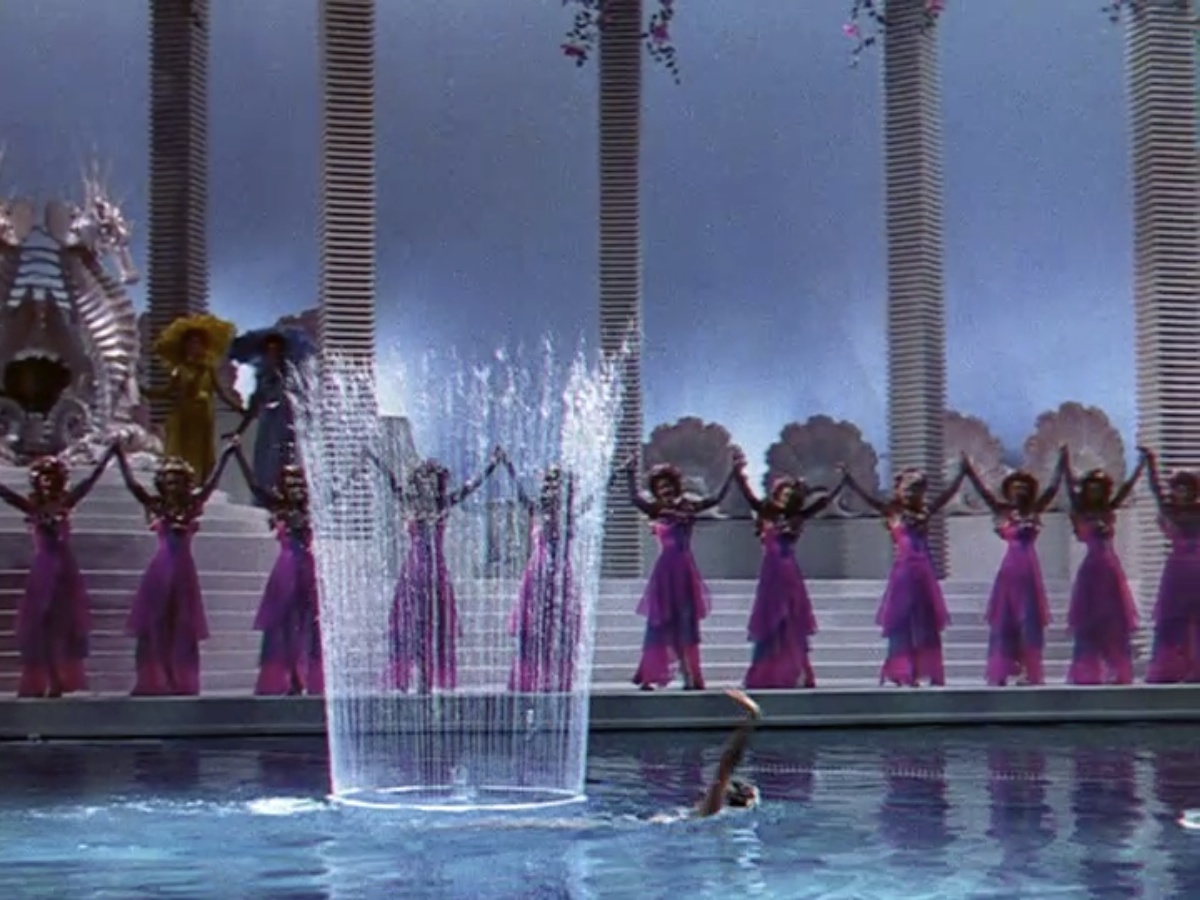
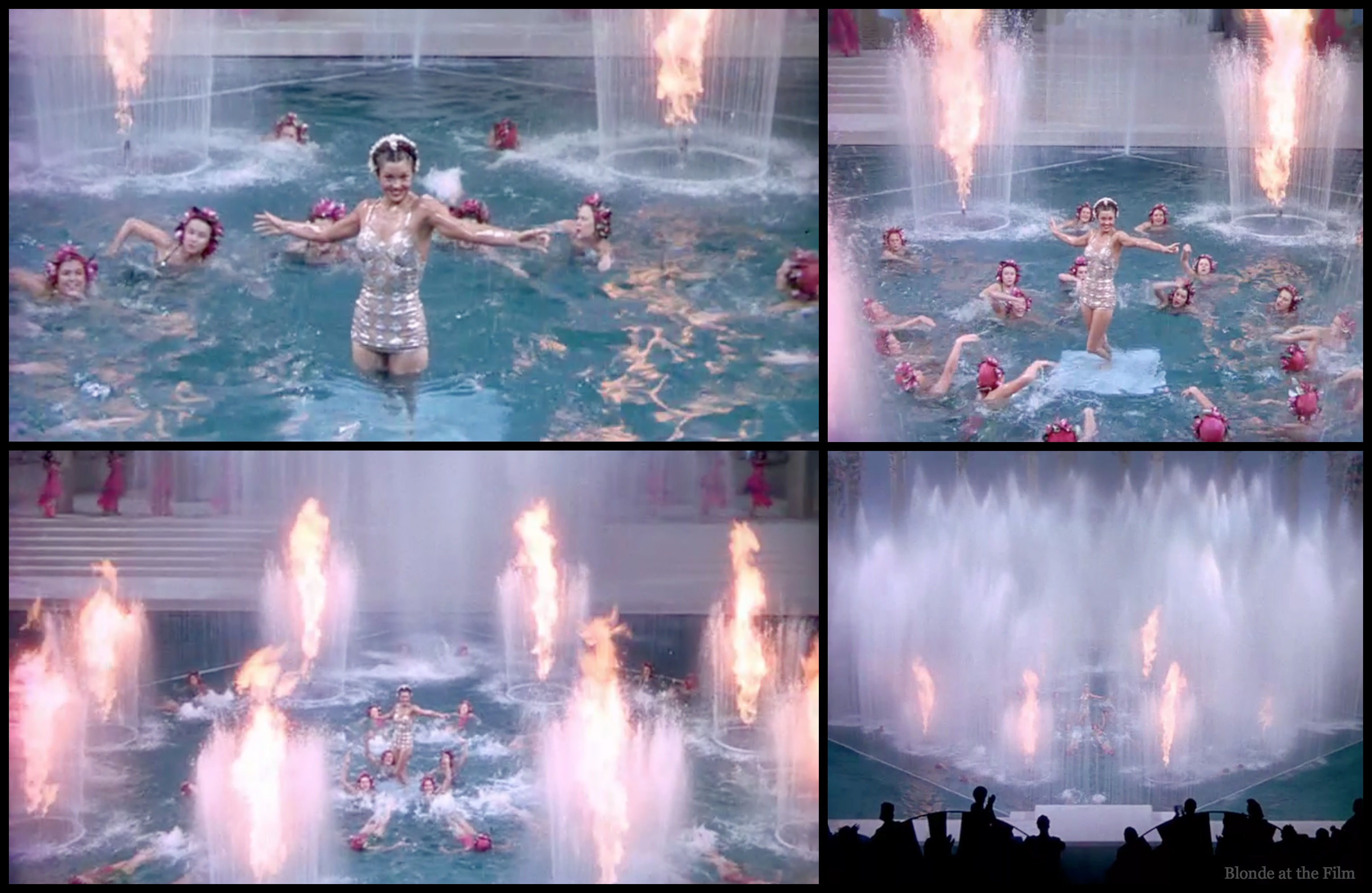
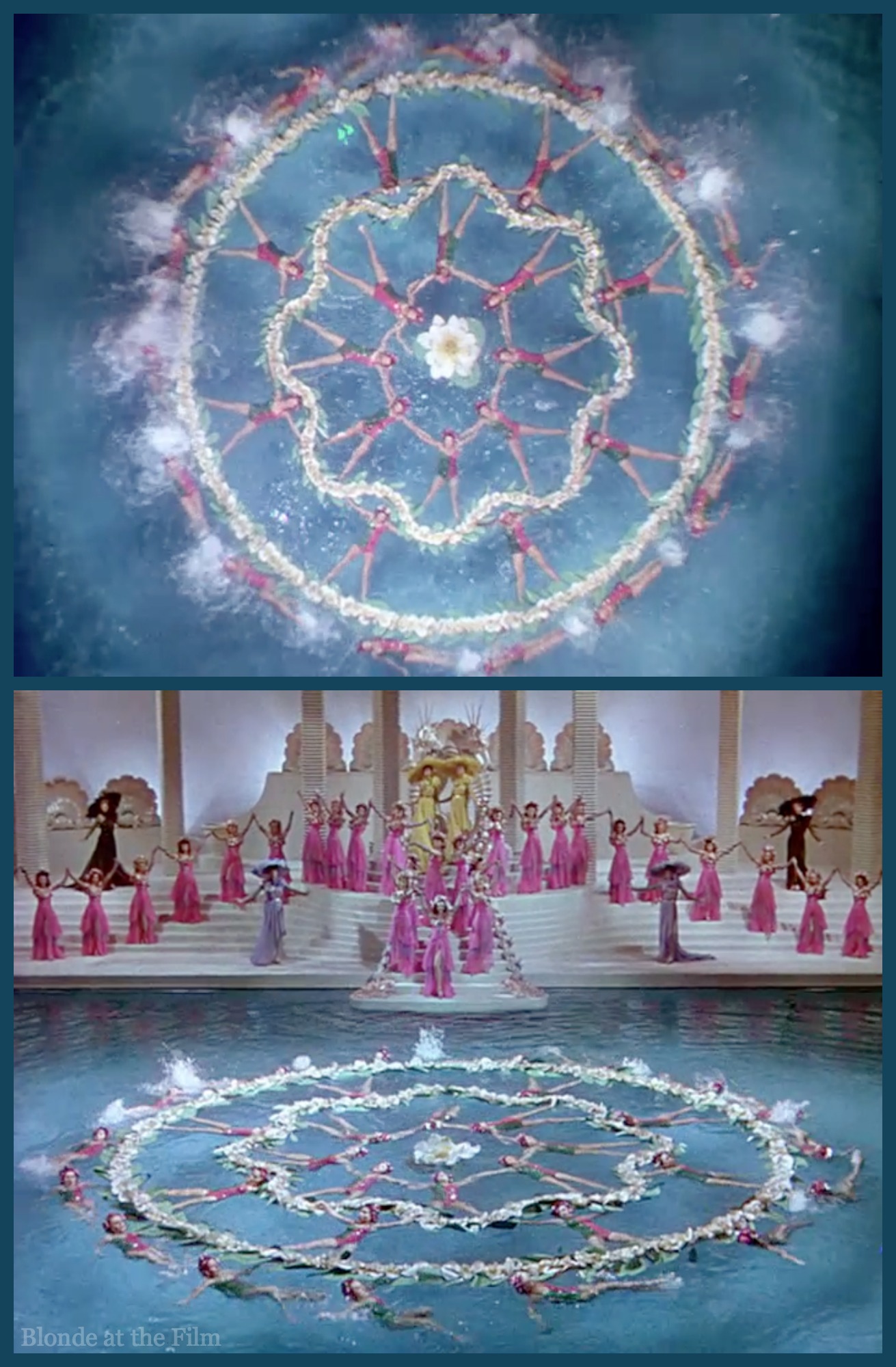

Re-making Stage 30 cost $250,000, just over five million in today’s dollars. It was an enormous sum at the time and Stage 30 represented an astonishing investment in the somewhat improbable new genre of the swimming musical. As Steven Bingen, Stephen Sylvester, and Michael Troyan wrote in their seminal book, MGM: Hollywood’s Greatest Backlot, Stage 30 was unique as the only soundstage that “can truly be said to be one star’s alone,” and MGM built it before Esther had done more than a few seconds of on-screen swimming! But unlike other stars, Esther was unique because her films required a large outlay of capital and a great deal of innovation up front. However, the studio was savvy enough to hedge their bets, and Stage 30 was constantly in use even when Esther wasn’t filming there. An empty stage was money wasted, so other films utilized Stage 30, covering the pools with a removable floor or even building sets inside the massive emptied tanks.
As the water wonderland on Stage 30 took shape, trade papers and Hollywood columnists began announcing Esther’s next films (a war drama tentatively titled Pacific Southwest set on an island, a musical called Sing or Swim, and a genre-less screenplay with the title Don’t Go Near the Water.) But her actual next roles would be quite different.
Inflation (1943) and A Guy Named Joe (1943)
In early 1943, Esther was cast as Mrs. Smith in the short film Inflation. It was part of the “America Speaks” series, which were made by the studios in concert with the U.S. government. Esther played the wife in an “average American couple,” opposite fellow newcomer Horace McNally (he would begin using the stage name Stephen McNally in 1948). Edward Arnold, who played the Devil, was the big name in the picture. The plot of the 17-minute movie was simple: the Devil goads Mr. and Mrs. Smith into a buying spree to illustrate the concept of inflation. Their selfish, unpatriotic actions help Hitler by causing prices to spiral. Their spree also delights the Devil, who is of course rooting for the Nazis.
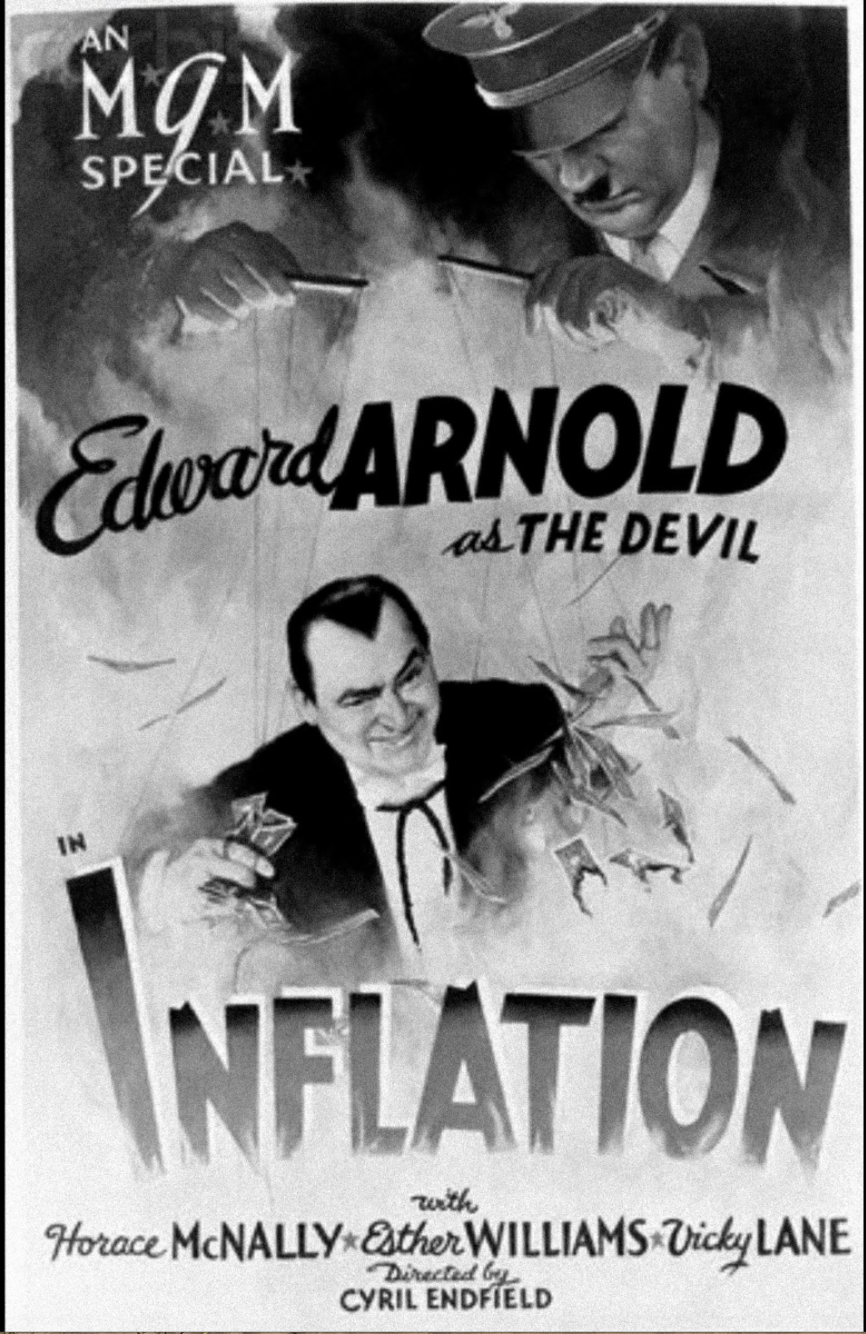
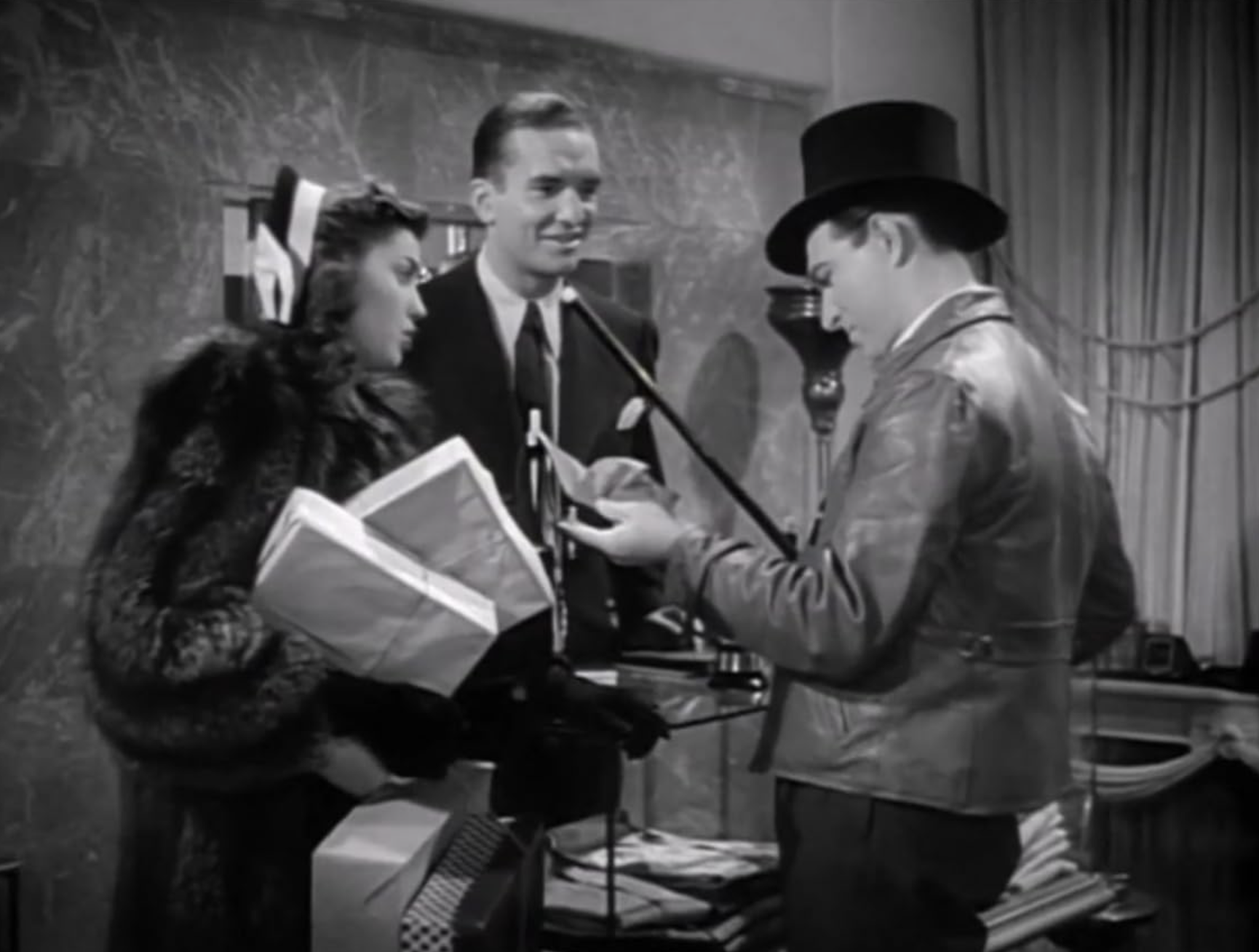
Inflation played in a very limited release in June and July 1943 before the Treasury Department asked MGM to remove it from circulation. The propaganda element wasn’t quite right, and instead appeared to encourage the very thing the movie sought to stop: “After looking it over, the Treasury Department concluded its message might prove a boomerang,” as the Smith’s shopping bender looked too enticing. It “might be a suggestion to others who hadn’t thought about wholesale shopping sprees.” The Film Daily reported that the sarcastic tone was also to blame, as “Treasury did not believe that the sarcasm was sufficiently strong to keep Americans from rushing out to buy everything in sight.”
Not many people saw Inflation, but millions would see Esther in her next movie, A Guy Named Joe (1943). She had a tiny part, but it was a very big film. It starred Irene Dunne, Spencer Tracy, and Van Johnson as pilots during WWII.

Esther had a small role as Ellen Bright, a U.S.O. gal who briefly captures Van Johnson’s attention before he refocuses on Dunne’s character. Production began in the middle of February 1943, and the movie was released in March 1944 (a Christmas Eve premiere in New York gives it the 1943 date). Critics weren’t enamored, but audiences came in droves and made A Guy Named Joe one of the top-10 grossing films of 1944. The movie belongs to the three co-stars, and Esther isn’t mentioned in the majority of reviews. In hindsight, it was just a blip in Esther’s career compared to her other 1944 movie, Bathing Beauty.
Bathing Beauty
In Bathing Beauty (1944), (head here for my full, illustrated review) Esther took on her first starring role as Caroline Brooks, a swimming instructor at a women’s college. It was the first of many water-related jobs—just as Fred Astaire often played a song-and-dance-man because that made it easier to get him on stage, Esther often played a swimming teacher or actress to get her in the pool. Red Skelton plays Steve Elliot, a successful songwriter whose producer George Adams (Basil Rathbone) is terrified that Steve’s upcoming marriage to Caroline will slow his string of hits. So George breaks up the couple with a dastardly trick that turns Caroline against Steve. The broken-hearted almost-bride escapes back to her old job, but Steve follows her, determined to win her back. In order to stay close to Caroline, he exploits a loophole that allows him to enroll in the college as the only male student, a goofy, Air Bud-before-Air Bud-situation perfect for Skelton’s comedy.
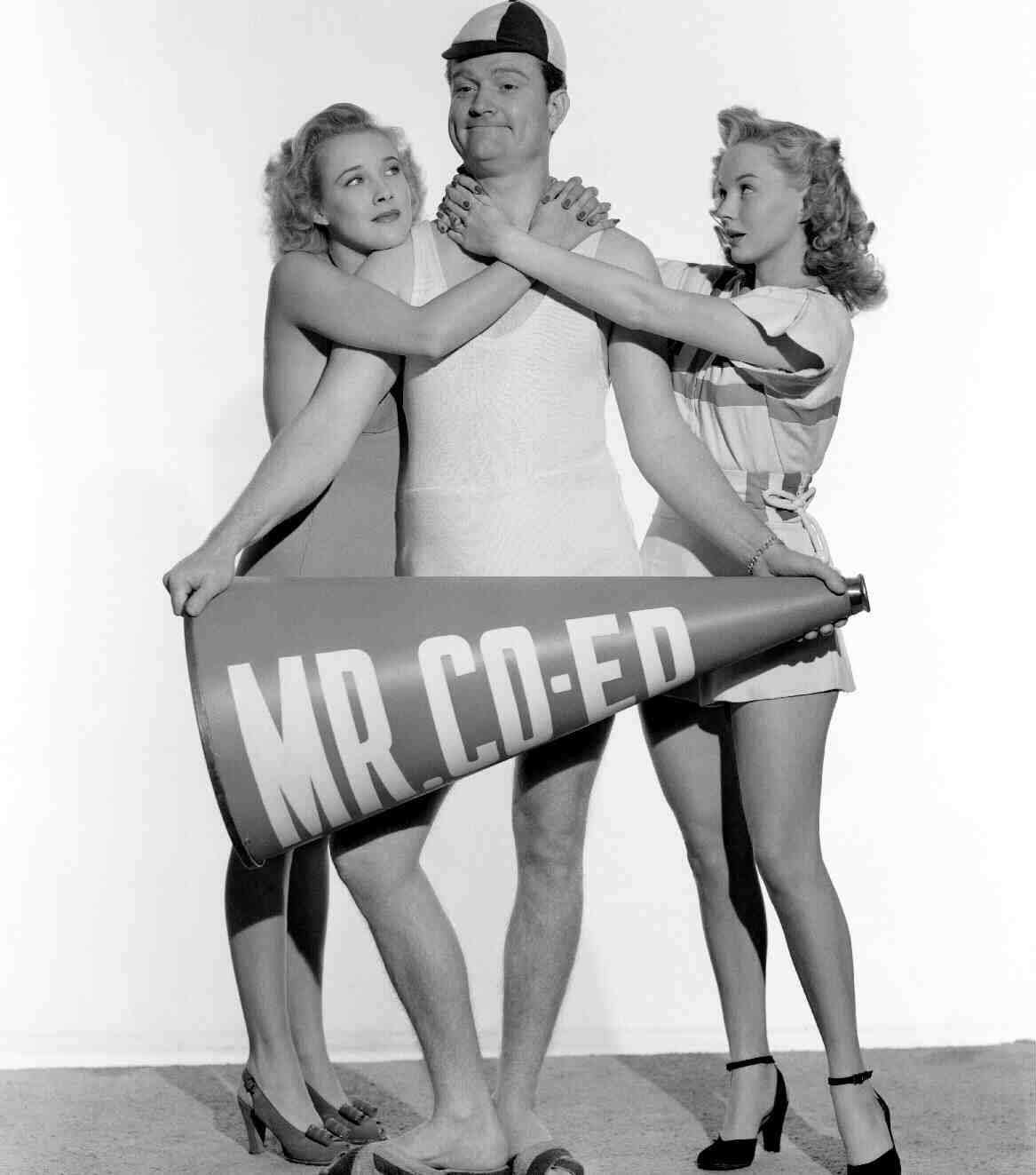
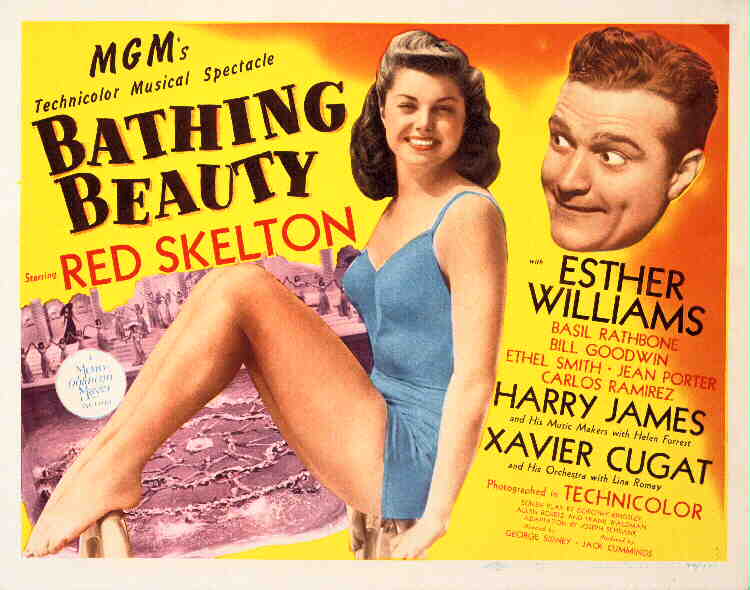
Bathing Beauty is the first true “Esther Williams movie,” but it didn’t start out that way. MGM originally intended to build Bathing Beauty around Skelton, who was a much more established star with a long career in vaudeville, radio, and Hollywood. In fact, the original title of the movie was Mr. Co-Ed, and early publicity materials emphasize the redheaded star over Esther. But when MGM saw the footage and received audience feedback from preview screenings, they knew that Esther stole the movie. So they retitled the film Bathing Beauty just a month or two before it premiered, and switched the focus of their promotional campaign from Red to Esther. And a bathing suit.
By the time production on Bathing Beauty began in mid-August 1943, Esther had been at MGM University for nearly two years, and, like Lana Turner before her, she had transformed from a beautiful amateur into a stunning movie star radiating confidence and poise.

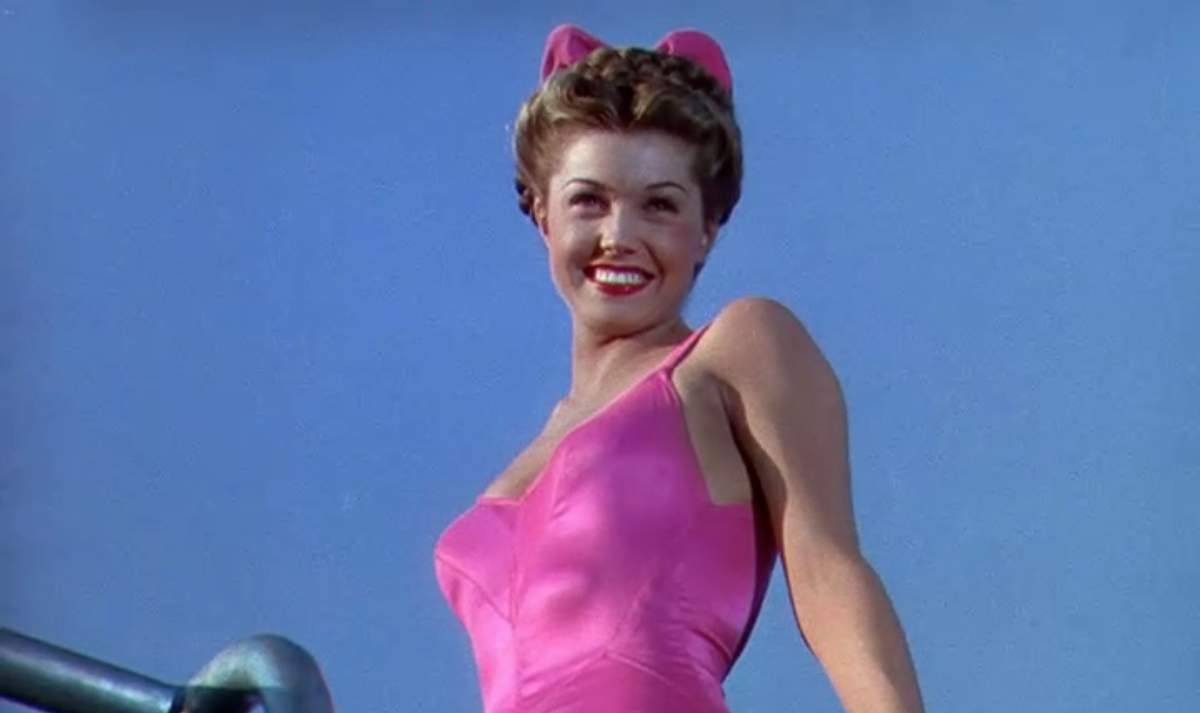
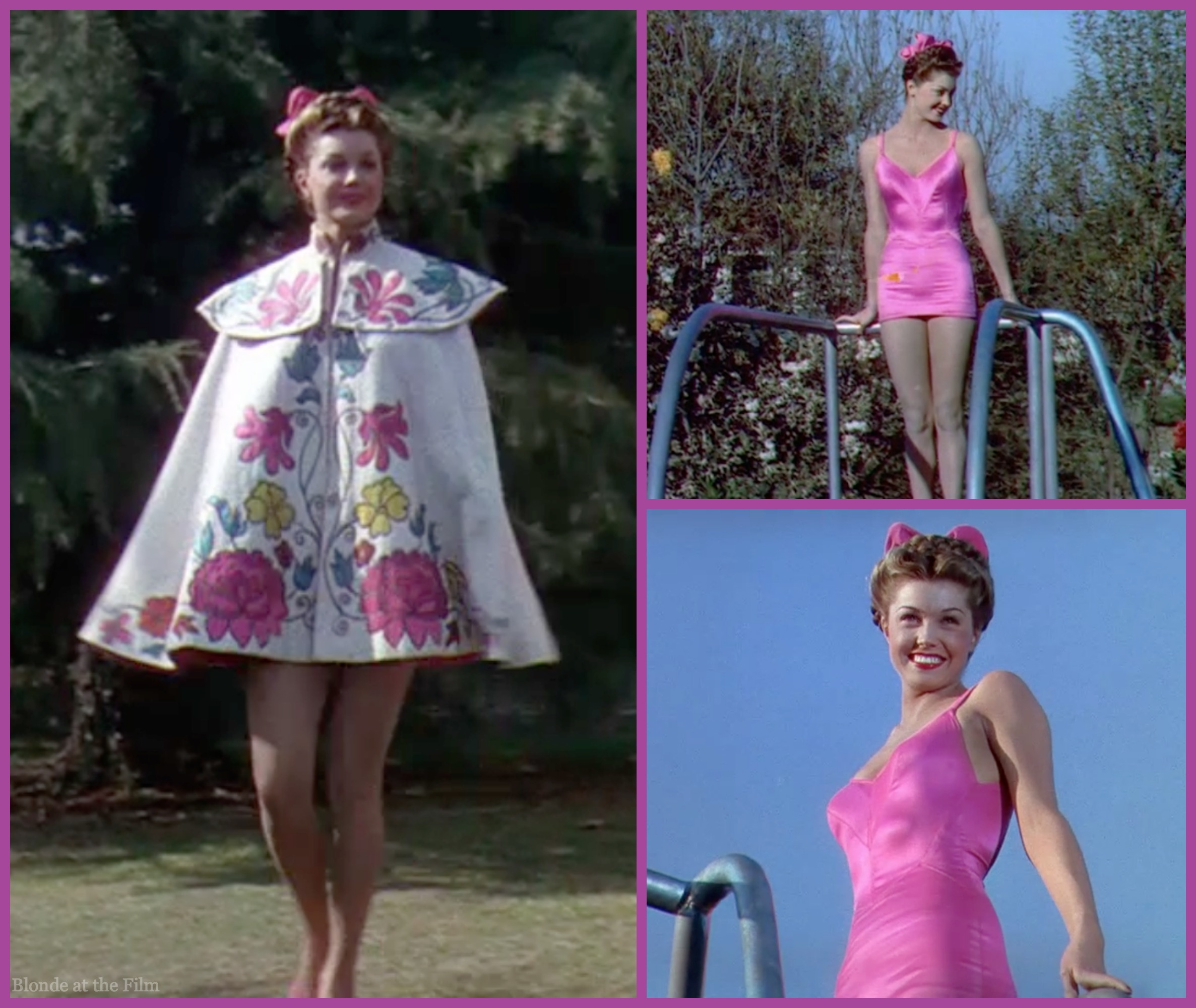
In her first scene, she appears poolside like a modern goddess in a hot pink one-piece bathing suit and a white “matador-style” cape with a floral design in pink, yellow, and teal. She glows in the stunning shallow-focus Technicolor as tenor Carlos Ramirez serenades her with “Magic is the Moonlight.”
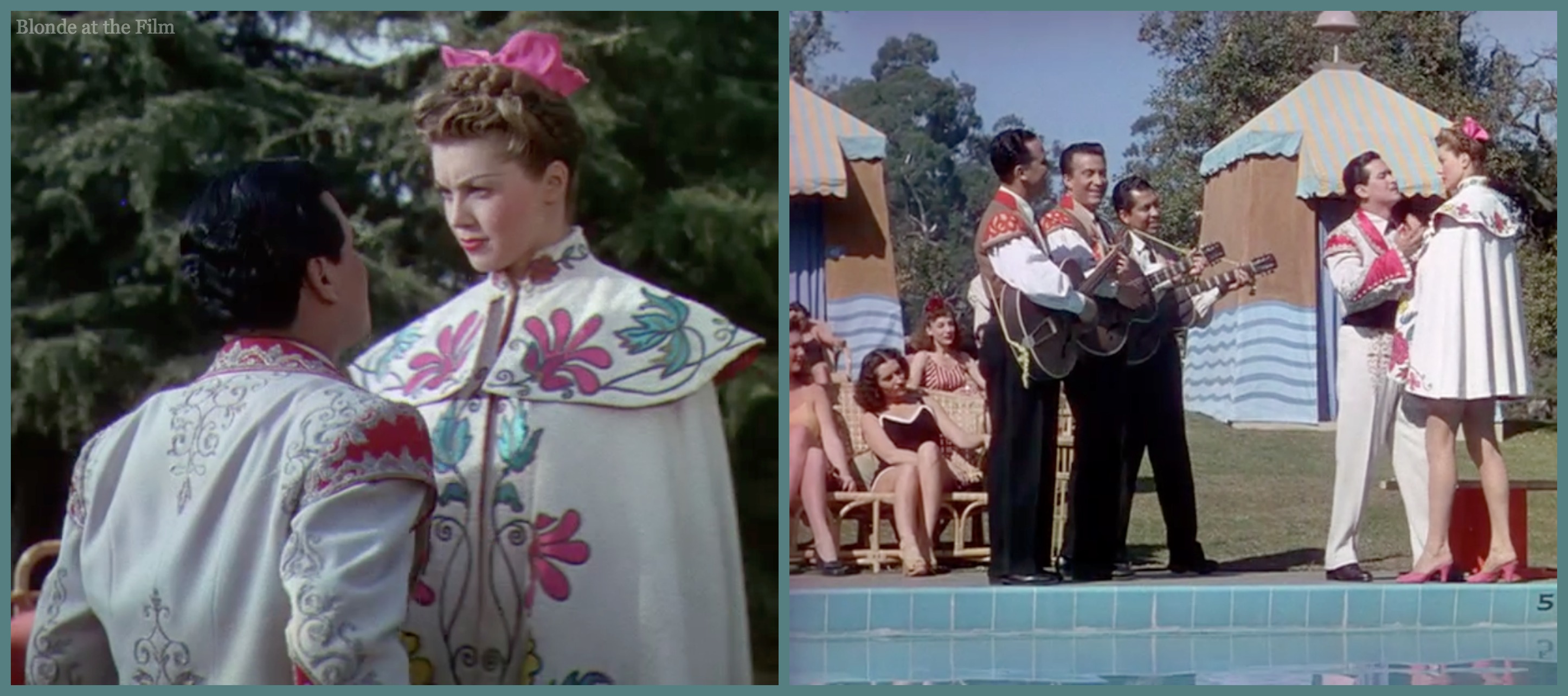
Then she dives into the cerulean water for a brief solo ballet.

Esther is gorgeous, bright, and glamorous in this perfect first moment, and the audience is as spellbound as her many admirers onscreen. The scene was so memorable, in fact, that “Magic is the Moonlight” became one of Esther’s signature songs, as she recalled in her autobiography: “Later, when I would enter nightclubs like Mocambo’s or Ciro’s, or the Stork Club in New York, the orchestra would stop what they were playing and begin the strains of “Magic is the Moonlight.”
MGM had the talent, the style, and the capital to produce glittering, glamorous extravaganzas, and they turned their full power on Bathing Beauty. The glamour shots, beautiful costumes and sets, and vibrant Technicolor were by now a house style, and MGM made everything shine. For example, the emerald-green grass by the pool that provides such a brilliant backdrop for Esther was fake. MGM filmed the scene at the Lakeside Country Club in Toluca, CA in early 1944, and when the crew arrived they were dismayed to see that the lawn was sporting its January brownish-hue, not summertime emerald. So they sprayed the grass the desired color. As Esther remembered, “We left the Lakeside Country Club a prettier sight than when we arrived. However, no one told the club that the paint destroyed their lawns for the rest of the year. The studio had to send a crew to reseed acres of painted lawns.”
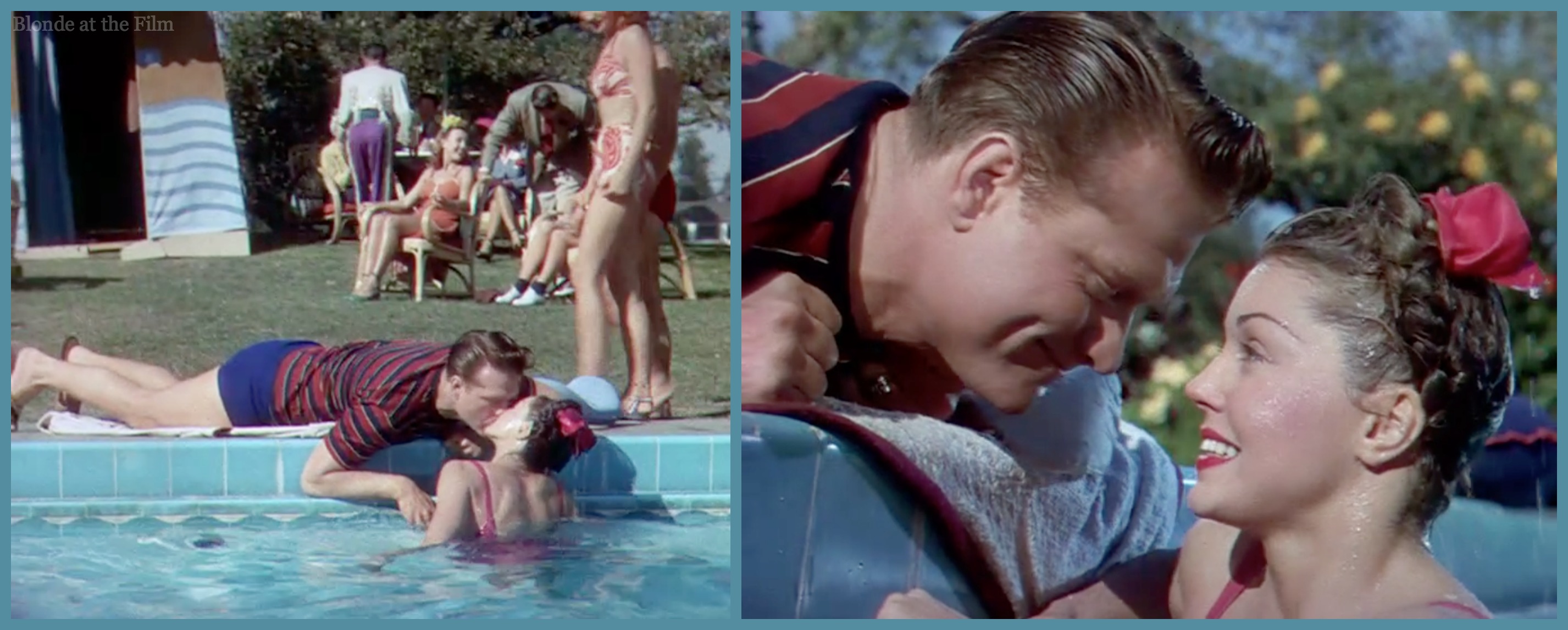
Painting grass was normal for MGM, who spared no expense in the pursuit of perfection. As Variety wrote “Bathing Beauty has been produced in the lush, lavish manner, which, by now, has become as familiar as the Metro trademark.” Esther shimmers in the lush production and candy-colored Technicolor in her first starring role, but this was expected. MGM turned reasonably attractive women into goddesses every day. The studio’s real magic is on display in the finale of Bathing Beauty when they finally got the chance to play with the toys on Stage 30.
Stay tuned for the next excerpt of The Mermaid and Me for more on Bathing Beauty and Esther’s ascent to stardom!
 The Blonde at the Film
she was a stunning distraction from WWII fatigue.